description

You have the opportunity to focus on an area of interest and investigate it for the entire semester. Self-motivation and daily progress are the key for a successful senior project (and to maintaining your overall sanity). The main outcomes of your semester will be: project brief, project execution and project documentation. The class is structured to allow you the platform to succeed within each of these outcomes.

objectives

    • To define a relevant design problem for directed study
    • To integrate meaningful research into the design process.
    • To critically analyze a subject matter and draw conclusions from the analysis.
    • To develop an appropriate design methodology for visualizing the subject /content.
    • To visually execute the idea on a high-level.
    • To document and represent your process as it relates to your semester’s journey.
    • To complete the above with respect for the semester calendar + deadlines

Project Brief

A project brief is a map for the semester, providing you the framework for a successful outcome. Each section will be addressed per the class deadlines, and the document will remain fluid until Monday, February 14. After this date, your intentions are set and you will move into setting yourself up for a thorough investigation. You will continue to evolve the language of the document, however the essential investigation (your observation and subsequent argument, etc ...) will be locked into place. Form may vacillate within the topic, but the topic will not change. Drawing the line here is intended to help you focus and not be distracted by continually shifting the grounds upon which you are working.

PLEASE NOTE in writing this:

    • Nothing should be written from the first-person point of view. Do not use “I”, “my”, “mine”, etc ....
    • Please keep your outcome for each section within the parameters indicated (ie: if it asks for a bulleted list, then provide a bulleted list).

What a thesis IS NOT:

    • A redo of a previous project. You can pick up a previous project and use that as the seeds for your thesis, however you are expected to take it much farther than you were able to the first time.
    • Your project should not be an exercise in training yourself on a new software program. Learning a program to generate your outcome should be a by-product, NOT an end goal.
    • Under no circumstances are you allowed to do a project for an existing client as a thesis project.
    • A project of process for the sake of process is not acceptable. Projects that focus on process must come to a level of conclusion through analysis and synthesis.
    • You may work in teams, however the department will expect a team’s worth of effort put into the project.

Brief Structure

Structure

Observation (1 Sentence)

This is where you will begin. What personal observation have YOU made that is the genesis for this semester.

Examples:

    1. Cartoons on television do not have enough strong female characters.
    2. High schoolers often learn history as an inaccurate and boring narrative that does not relate to current events or require critical thinking.
    3. Emotional abuse effecting women often goes unnoticed because of the lack of physical evidence.

Argument / Proposition (1 Sentence)

What is your point? If you select something that is obvious and universally-known, you are not making any kind of point worth an entire semester’s worth of work. In other words, it is not an argument if no one would argue the point. If it is an over-generalized given, you have no where interesting to go. Your argument should be successfully addressed in your final form.

Examples:

    1. More female characters are needed on TV to represent a balanced society and promote gender equality
    2. Historical stories presented in a relatable tone of voice will bring the past to the present, thus encouraging critical thinking of the materials provided.
    3. Women may escape detrimental relationships sooner rather than later if they understand that what they are experiencing is abuse.

What Research Backs Up Your Argument? (Bulleted List)

Provide your top 3 research findings that support or illustrate your argument (this assumes you actually have more than 3). These should be cited and written in your words. Any direct quoting must be in quotation marks. No more than 3 sentences per bullet item. [In addition to the above, reference Chapters 5 + 6 in The Craft of Research]

Audience (Single Phrase)

For whom are you designing?

Examples:

    1. School age children ages 6-12
    2. 11th grade US history students
    3. College women 18-26

Audience Value (1 Sentence)

Of what value will this be for the audience? (not for you!)

Examples:

    1. Promotes healthy female role models and reinforces gender equality
    2. Encouragement to think critically and question what you are learning
    3. College-age women experience a greater sense of independence that offers a more focused sense of self. This self-awareness may lead them to take the first steps in identifying their situation and seeking help.

What is your Intention with the Outcome? (2 words, starting with ‘To…” )

Use a single word to describe the way you perceive the current purpose of your execution (inform, entertain, delight, educate, etc ...)

Examples:

    1. To entertain
    2. To educate
    3. To educate

Keywords Relative to this Project (list)

You need to be certain that you understand the terms you are working with in the context of your project.

Begin by listing up to 5 keywords.

Examples:

    1. Sexism, Gender Equality, Female Character
    2. Truth, Critical thinking, Primary source, History, Memory
    3. Narcissist, Emotional Abuse

What this Project is Not (1-3 sentences, starting with “This project is not …”)

State up front what you will not be doing in this project. This is important for you to develop as it will help you to set the intentions for the project.

Examples:

    1. This project is not a statement on how women are better than men, not in any way degrading to men in the way men have degraded women in the past, nor is it an ‘in your face’ treatment of how society should treat sexism.
    2. This project is not a serious lesson plan for teachers.
    3. This project is not an extensive exploration of the abuser’s mentality, satire or subversion of the issues, a comprehensive psychological breakdown of abuse (while it does ask ‘why’, it mostly asks ‘what’).

Anticipated Form (1-2 sentences)

At this stage what are you anticipating as the formal outcome.

Examples:

    1. Pitch book of animated character that could be presented to TV networks in the form of a graphic novel
    2. Zine that would present history in an entertaining and engaging way
    3. Booklet to be handed out to patients by the doctors / awareness poster

What Expert will you be Speaking With + Why + When (1 sentence)

Who are they, why are they relevant, when did/will you be speaking with them? It is imperative that you talk to an expert in the subject area you are intending to explore. While you will inevitably become a mini-expert, your goal here is to process the content through the design, not to write a formal dissertation on the subject. Find people who can help you understand the theories and needs of what you are trying to say.

Examples:

    1. Brenda Laurel, Advocate and Researcher on girls and video games
    2. Matt McWhirter high school history teacher at Bearden High School
    3. Dr. William K. Hahn at the Student Health Center, Psychologist

Precedents (no more than 3, very strong, examples)

Precedents do not necessarily have to be exactly what you are doing, they can be examples of outcomes or similar types of explorations. You should title, cite and include a sentence explaining its relation to your project.

Anticipated Deliverables (Bullet List)

Here you should state exactly what you will need to produce for this project in the general order you would need to address it. Please think about the entire design process and consider items such as:

    • writing content / finding content / interviews / etc …
    • site maps / wireframe / user experience map / etc …
    • proof / lo-fi prototype / hi-fi prototype / etc …
    • branding archetype / identity comps / style guide / etc …

And end with what you anticipate to be the final designed pieces (ex: logo, intro screen, style guide booklet).

Abstract (MAX 100 words)

This should be brief, but it will pack a lot of information and set-up your investigation in a very clear and concise manner. You are obviously not providing the results in this paragraph.

An abstract tells readers what they will find in the project. It should be shorter than the project description and do three specific things:

    1. state the observation
    2. announce argument
    3. state the launching point that anticipates the response

EXAMPLES

01:
Children absorb mass amounts of information about social norms through the television they watch. With leading female characters being outnumbered 3 to 1, and the majority of those characters being created by men, children may be mislead about how women fit into society. More female characters are needed on TV to represent a balanced society and promote gender equality.

03:
Emotional Abuse effecting women often goes unnoticed due to of the lack of physical evidence. Women may escape detrimental relationships sooner rather than later by understanding that what they are experiencing is abuse. This project intends to inspire the "aha-moment" in identifying an abusive relationship.

Project Description (MAX 300 words)

The project description at this point does not yet outline the end results. It allows you to expand on the context, problem and point outlined above. We will revise this periodically throughout the rest of the semester, eventually weaving into the final outcome. The final abstract and project description should give the reader a very clear understanding of the thesis project from problem to solution.

Each project description should contain the following:

    • step 1: contextualize the background (observation)
    • step 2: statement of the argument + consequence
    • step 3: provide a response and intention

Step 1: Establish common ground.

The opening context is called common ground because it establishes a shared understanding between the reader and writer about the larger issue the writer will address. This is setting up and identifying your observation, providing more context for the setting and understanding of the observation.

Step 2: State your argument/problem + its consequence.

Once you establish common ground, disrupt it with a problem You can consider doing this in two ways. You can state it directly in relation to your context “ ... but there is no data showing the icons are self-explanatory” or you can imply it in an indirect question, “The real question is why these characters are always white and male.” Once this is stated, you then must provide some level of insight into the consequence of this argument. Imagine that someone says ‘so what’ to your argument, how would you justify it? Example, if the argument is, “The hole in the ozone layer is growing more and more each year” a consequence would be “A bigger hole exposes us to more dangerous ultra-violet light. (note from Everett: I realize this is the first time you have done this in narrative form, give it a shot and we will edit from there).

Step 3: State your response.

Once you follow up on your observation with your argument, you should resolve it by providing an idea as to where you see your project heading, implying that the end project will address your observation. You should fold in your intention, audience and the value of this outcome for the audience.

EXAMPLE:

03:

At some point in most people's lives, they will be negatively impacted by the hurtful words of others. Because language is one of the most powerful tools of communication, when used to belittle others the effects can be of shocking magnitude. Words often carry very specific meaning to individuals and have the potential to be a weapon forged specifically against their own perceptions. When words are systematically and continually used as a weapon against the psyche of another, what results is the psychological warfare of emotional abuse. Due to the transparent nature of emotional battering, the cycle of abuse is often unnecessarily prolonged.In cases of physical battering, some women reported that the emotional manipulation by their intimate partner was far more impactful than the physical damage. Both victims of emotional and physical abuse alike develop a highly distorted perception of reality due to the abusers' as well as their own inability to articulate their internalizations. Within the context of an relationship, emotional abuse may be especially damaging when a sense of intimacy heightens dependency. The relationship can therefore be highly traumatic and permanently destructive. Because emotional abuse is an attack on the mind, many women do not understand until much later that the mental "come apart" that is characteristic of victims is a symptom of pervasive abusive language. Were women in detrimental relationships able to understand that what they are experiencing is abuse, they might seek help sooner rather than later. This recognition is the step toward recovery that could ultimately allow them to escape the situation. T his project reveals abusive behavior in a way that exposes the lasting damage of psychological violence. College-age women, ages 18-26, may be more likely to take the first steps toward identifying their situation and seeking help due to a heightened sense of selfawareness. It is to this audience that I want to expose the transparent nature of abuse that they might seek professional assistance in recovery.
Presentations

Courses designated “OC” (Oral Communication) make use of multiple speaking assignments and integrate oral communication into both the teaching and grading for the course. During presentations, students are evaluated by faculty and peers to situate the feedback within a professionally relevant context. Students are expected to demonstrate oral communication competency by preparing and delivering presentations that address the following points using the outlined criteria:

    • Exhibit sound organization, a clear purpose adequately supported by main ideas that are easily identified. (0-4)
    • Correct use of grammar, pronunciation, and articulation. (0-4)
    • Exhibit skillful use of internal summaries and/or transitions. (0-4)
    • Establish genuine rapport with listeners through style and delivery. (0-4)
    • Exhibit skillful body movement. (0-4)

During the presentations, the presenter needs to stand in front of the room rather than the back. If your project is mainly print-oriented, then it should be printed out at each presentation. Printouts are required for final presentation. You should review each presentation prior to giving it to ensure it exported correctly. No presentation should be given from Google slides or as a PDF. They should be crafted in either Powerpoint or Keynote.

Evaluation scale:

    • 0.0 – did not perform the requirement adequately.
    • 1.0 – an attempt was made to meet the requirement, however the execution was not satisfactory.
    • 1.5 – an attempt was made to meet the requirement the execution was almost satisfactory but contained flaws.
    • 2.0 – the attempt and execution were satisfactory.
    • 2.5 – the attempt was thoughtful and the presentation was well executed.
    • 3.0 – the attempt was well organized and the presentation was skillfully executed.
    • 3.5 – the attempt was very well organized and the presentation was very skillfully executed considerable planning and practice were evident.
    • 4.0 – the attempt was very well organized and the presentation was very skillfully executed and innovative. Student exceeded instructor requirements.

Capstone Book

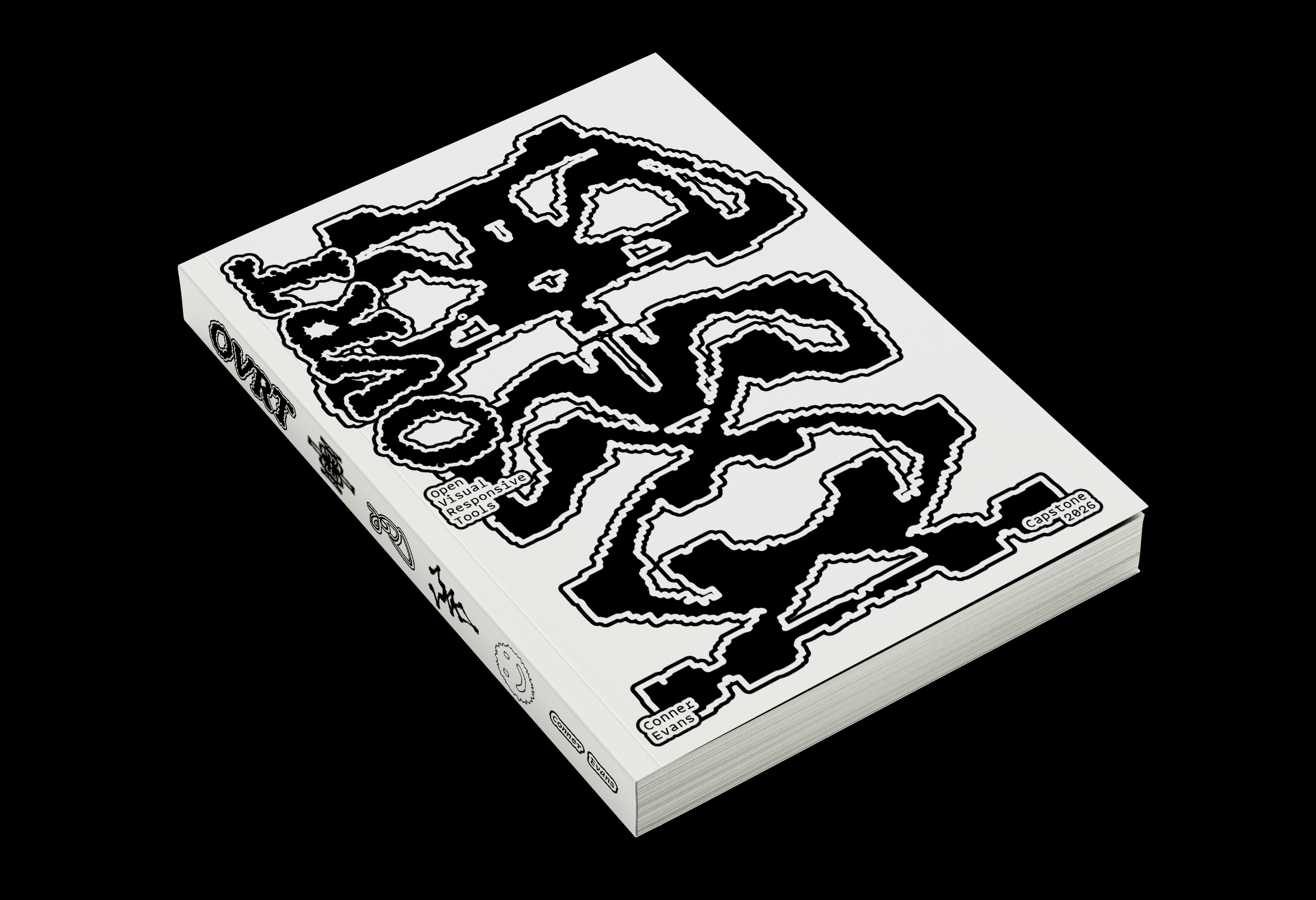
Your capstone book is a place to give proper explanation, documentation, and evaluation of your project and its creation. You should be working on this book throughout the semester, meeting the progress check-in deadline. The overall design is up to you, however this must be a professionally produced piece. You are required to create 2 copies - one for you and one to submit for the program. Your book must include the following content:

    • Cover + Spine:
      Your name, project title, and year of completion must be on both cover + spine
    • Final Brief:
      All final components of your final project brief. You do not need to detail each version unless there are some large leaps that are relevant to your process.
    • Process + Methodology:
      The process you went through to achieve your goal such as week-to-week explorations, iterations, research and interviews, etc ...
    • Presentation Reflection:
      Written reflection from BOTH your mid-term and final presentations as well as others along the way.
    • Evaluation + Conclusion:
      How has this project affected you as a designer? What have you learned during the process? Were you able to successfully materialize the statements in your abstract? What can you synthesize from each of your professional presentations?
    • Further Directions:
      How might you extend this study? If you were given more time, more resources, etc… how could/would you expand the scope of this project?
    • Annotated Bibliography:
      A properly documented bibliography which includes a 1-2 sentence description of each work cited.

Your book must be professionally bound. You are required to provide a physical copy of this documentation in order to receive your final grade.

In order to assist in the creation of this book as a living documentation of your work, you will use the provided google doc and Google Drive folder to document your progress. Many of your content deadlines will be viewed within this document. There is a page on CANVAS dedicated to the benchmarks of this process. The google doc will serve as your content space for designing the actual book at the close of the term.

Course Assessment

grading

Your grade for this class will be based on the following criteria:

    • Understanding, completion, and quality of all aspects of the class requirements from concept, research, and process through to final presentation.
    • Ability to transform an observation into a self-contained whole.
    • Professionalism. The quality of the presentation of your projects and ability to articulate your concepts — and the level of work towards the Senior Show
    • Ability to process, implement and improve presentation based on feedback (OC)Ability to successfully manage your time in relation to the scope of the project.

Your final grade will be based on the above with additional consideration being given to your attendance and ability to get to class on time both at the start of class and after breaks. You are required to show on the days and times that are allotted for you, unless indicated otherwise. Any change in schedule will be emailed to all students and posted on CANVAS. Due to the flexible nature of this course, you are allowed 2 absences without being penalized, except for the midsemester and final thesis presentations, those are both required for all students. After 2 absences your final grade will go down 1/2 a letter grade for each missed class. Two tardies will equal an absence. As this is required class to complete the graphic design program at UTK. There will be NO INCOMPLETE (I) GRADES GIVEN UNLESS THERE’S A DIRE EMERGENCY BACKED UP WITH PROPER PAPERWORK. Period.

grade components:

    1. Completion of thesis project, meeting the requirements of each deadline, thoroughly and on time - 50%
    2. Completion and submission of process book - 40%
    3. Successful improvement of OC skills throughout the semester. - 10%
    4. Participation and attendance at required presentations, reviews & senior show (failure to show will result in not passing the class)
Grade Description
A Strong design process / good listener / ability to come up with many different ways to approach assignments / thorough research / mastery of form, functionality, and craft / frequent participation in critiques and discussion / focused / attentive / ability to articulate ideas / risk-taking and broad exploration
B Solid , well-done work / could improve on the items noted in the A list, in particular: better process, more solutions, better craft and attention to detail, more class participation 
C Average work / fulfills assignments but not much else / doesnt re-work or refine projects, doesn’t do much beyond the requirements 
D Limited effort / incomplete work / lack of skill and enthusiasm / chronic tardiness and unexcused absences / does not follow instructions / poor craft

School of Design Policies

By choosing to major in this program, we are expecting that you want to be prepared for your future career. Therefore, classes, in-class critiques, in-class presentations and due dates, and associated school policies are designed to help you grow into the profession.

School of Design Class Modality Statement

Faculty in the School of Design learned from earlier required online instruction that some online activities conducted during class time in lieu of meeting in person can be advantageous for a variety of reasons. Therefore, the day-to-day class modalities are at the discretion of your course instructor. Any change in a class modality outside of an unexpected personal need will be shared with the class in advance.

Lateness Policy

Every course in the School of Design is considered a professional appointment and you are expected to come prepared. This includes arriving on time, being present during the entirety of the course times, and respecting the below-identified absence and tardy policies of the school. Students who do not come to class prepared with the required work and/or materials for the day will be asked to leave the class and be given an absence for the day.

Tardies

    • Tardy = 10 minutes late to class
      2 Tardies = 1 absence
    • You should provide the instructor the courtesy of an email beforehand alerting them of your need to be tardy. If a student needs to arrive late or leave early, the student is acknowledging that they have made a choice to interrupt the class.
    • Students who leave more than 30 minutes prior to the end of class, or do not return after a class break, will receive an absence for the course. DO NOT announce during class that you need to leave early. If there is a medical situation you will need to meet with your instructor after the situation is stabilized. Likewise, students should not ask a classmate to deliver a message to the instructors. If a student has a message they should deliver it themselves.

Absences

    • Due to the flexible nature of this course, you are allowed 2 absences without being penalized, except for the midsemester and final thesis presentations, those are both required for all students. After 2 absences your final grade will go down 1/2 a letter grade for each missed class. Life happens, don’t waste these.
    • Negotiations on absences that fall outside the allotment granted by the attendance policy are at the discretion of the course instructor and must be submitted as follows:
      • Death in the family - Follow the instructions for informing your instructor of an absence due to bereavement on the UTK Student Success notification page.
      • Illness - Follow the instructions for informing your instructor of an absence due to an illness (including COVID) on the UTK Student Success notification page. Any subsequent communication with your instructor on this issue must be accompanied by a doctor’s note either paper or digital via email.
    • If you expect to have a school excused absence at some point during this class, it is expected that you provide the material documenting this need to miss within the first 2 weeks of the term.
    • Once you have reached 1 absences, you will be sent an email indicating you have one remaining absence. This will be ‘ccd to your advisor and notated on Navigate.

Course Incomplete

An incomplete is not a way to avoid conducting the coursework. A student must have completed at least 70% of the class with a passing grade. If this is true, then incompletes are considered for an event that is outside of the student’s control that prohibits the submission of work. The student and the instructor will be completed by yourself and the faculty which clearly outlines the reason for the request, the agreed-upon deadlines, and the scope of work to be completed.

Course Withdrawal

Per the university handbook, students who withdraw from the class will receive either a withdrawal passing (WP) or withdrawal fail (WF) based on the work that has been completed by the student at the time of withdrawal. It is the student’s responsibility to alert the faculty of their need to withdraw.

After Class Faculty Contact

All questions should be asked during class. Please do not wait until the class ends to approach the faculty with a question, chances are there are other students with the same inquiry. Faculty provide office hours to assist students as needed outside of class time, please note the time on the syllabus. Emails sent to faculty will be returned as the faculty is able to reply. Should the question be more relevant to the entire class, faculty will provide answers during class.

    • Your responsibility as the student:
      • Touch base with your instructor within the first two weeks of school, or upon receiving an accommodation to discuss your personal accommodation needs.
    • My responsibility as the instructor:
      • Upon notification of your accommodation, I will engage with the student disability portal and ensure I am fully aware of your accommodations. Should there be a concern about your needs relative to the course, I will reach out to your care coordinator to share this concern.

Disability Accommodations

Student Disability Services will work with students and faculty to coordinate reasonable accommodations for students with documented disabilities. Any student who feels he or she may need accommodations based on the impact of a disability should contact the Student Disability Services (SDS) to document their eligibility for services as soon as they are aware of this issue.

NOTE: Accommodations received in the middle of the term are not retroactive.

Name and Pronoun Accommodations

If you use a name and/or pronouns other than what is in the course roll, please email me with the name and/or pronouns that you would like me to use and I will be glad to accommodate this request.
I use the pronouns he/him.

University Civility Statement -- http://civility.utk.edu

Civility is genuine respect and regard for others: politeness, consideration, tact, good manners, graciousness, cordiality, affability, amiability, and courteousness. Civility enhances academic freedom and integrity and is a prerequisite to the free exchange of ideas and knowledge in the learning community. Our community consists of students, faculty, staff, alumni, and campus visitors. Community members affect each other’s well-being and have a shared interest in creating and sustaining an environment where all community members and their points of view are valued and respected. Affirming the value of each member of the university community, the campus asks that all its members adhere to the principles of civility and community adopted by the campus.

Emergency Alert System - http://safety.utk.edu

The University of Tennessee is committed to providing a safe environment to learn and work. When you are alerted to an emergency, please take appropriate action. Learn more about what to do in an emergency and sign up for UT Alerts. Check the emergency posters near exits and elevators for building-specific information.

In the event of an emergency, the course schedule and assignments may be subject to change. If changes to graded activities are required, reasonable adjustments will be made, and you will be responsible for meeting revised deadlines.

Academic Integrity

Each student is responsible for his/her personal integrity in academic life and for adhering to UT’s Honor Statement. The Honor Statement reads: “An essential feature of the University of Tennessee, Knoxville is a commitment to maintaining an atmosphere of intellectual integrity and academic honesty. As a student of the university, I pledge that I will neither knowingly give nor receive any inappropriate assistance in academic work, thus affirming my own personal commitment to honor and integrity.”

Your Role in Improving the Course through Assessment

At UT, it is our collective responsibility to improve the state of teaching and learning. During the semester you may be requested to assess aspects of this course either during class or at the completion of the class. You are encouraged to respond to these various forms of assessment as a means of continuing to improve the quality of the UT learning experience.

University Honor Statement

An essential feature of the University of Tennessee, Knoxville is a commitment to maintaining an atmosphere of intellectual integrity and academic honesty. As a student of the university, I pledge that I will neither knowingly give nor receive any inappropriate assistance in academic work, thus affirming my own personal commitment to honor and integrity.

Disclaimer on AI chatbots

Learning a new skill is a challenging and iterative process, at times messy. It’s in these moments of frustration that we allow ourselves to grow and have a new experience. Do not rob yourself of the opportunity to do that.

That being said, students are allowed to use AI chatbots like ChatGPT, Google Bard, GitHub Copilot or Overflow AI as a supplementary tool to enhance their learning experience during this class. These chatbots are a powerful learning aid that can be used to:

    • Proofread code you already wrote
    • Add an explanation to why the code is or isn’t working so that you can understand it better
    • Debug and catching typos

It is important to maintain a philosophy of learning, critical thinking, and independent problem-solving throughout the class and to open ourselves up to the mental space of being challenged. AI chatbots can help you understand your code better and help you identify typos, however, it is not a substitute for learning how to code yourself, or developing creative solutions to the projects. Hands-on coding, visual experimentation, and diligence are all important skills in becoming a designer, and we should commit to developing these skills in the classroom and beyond. Using an AI chatbot to complete your entire project is not permitted, nor can it be used for generating ideas. If you choose to do this, the person you’re disadvantaging is yourself.

Wellness

Center for Health, Education, and Wellness manages 974-HELP, the distressed student protocol, case management, the Sexual Assault Response Team, and the Threat Assessment Task Force.

The Student Counseling Center is the university’s primary facility for personal counseling, psychotherapy, and psychological outreach and consultation services.

Your Academic Coach can help you improve your skills and performance. Working with an academic coach can help you study smarter by developing skills in time management, goal setting, and test preparation through a personalized, one-on-one meeting. Make an appointment with your academic coach through Navigate. (This coach is NOT an academic advisor. Program-related questions should be directed to the School of Design Advisor).

Your Academic Advisor can help to answer any questions or concerns you have regarding the Graphic Design degree, School of Design, or College of Architecture and Design.